

Art is not the finishing touch
In many commercial projects, art is still treated as the final layer. The walls are painted, the furniture arrives, the signage goes up, and then someone asks what should go on the walls. Art becomes a last-minute decision, something decorative to soften the space.
But when art is considered earlier, and with intention, it changes the role it plays. It stops being an accessory and starts becoming part of the way a building feels, functions, and communicates. This is what we see across the corporate art collections and workplace art programs we develop at Art Pharmacy.
Art is often the simplest way to shift the emotional temperature of a space, and at the same time, one of the least measured.
Why workplaces feel different when art is considered
In offices and commercial buildings, the environment people work in has a direct effect on how they feel about their jobs. Spaces that feel generic or purely functional rarely inspire much loyalty. When art is curated with care, the workplace starts to feel more considered and more human. People notice when their environment has been thoughtfully designed. It creates a quiet sense of pride and attachment to the space, which contributes to staff retention in ways that are difficult to replicate through furniture or finishes alone.
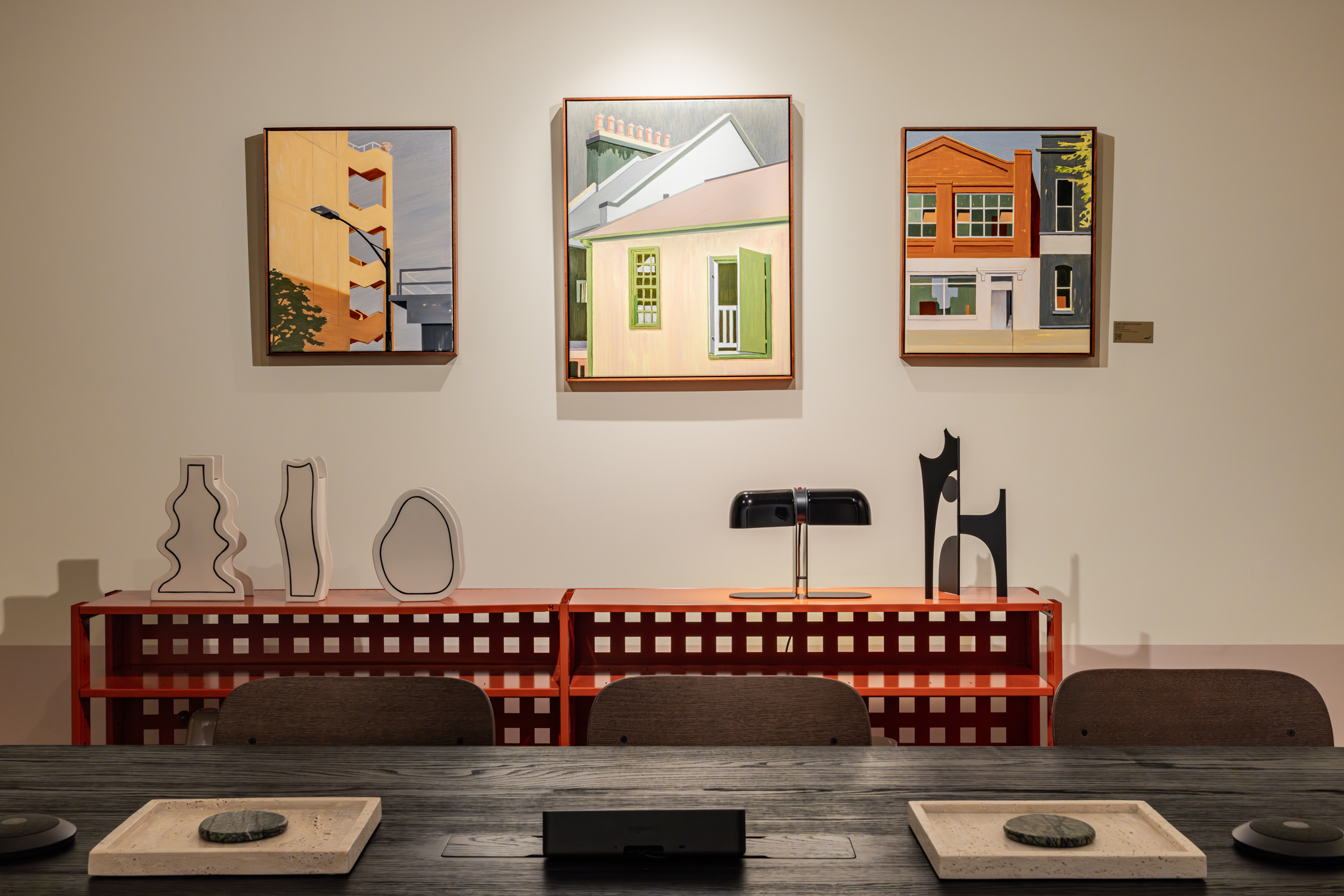


A sense of belonging, not just occupancy
Art helps create identity. A corporate art collection can reflect the local area, the organisation’s values, or the diversity of the people who work there. When someone recognises a landscape they know, an artist from their community, or a story that feels familiar, the building becomes less anonymous. It starts to feel like a place with character, rather than just another office floor.
Telling the brand story without saying a word
Most organisations invest heavily in messaging, tone of voice, and visual identity, but very few consider what their spaces are saying. Art communicates values without a single word. It can signal curiosity, generosity, cultural awareness, or ambition. In corporate environments, a well-considered art strategy often says more about a company than any reception desk or slogan ever could. Colour, scale, and material all influence how people feel. Some artworks slow people down. Others energise a space. In high-pressure workplaces, art can create moments of pause, reflection, or even quiet joy. Over time, these small moments accumulate and shape the overall experience of being in the building.
Art as part of ESG and social impact
For organisations focused on ESG outcomes, art offers a direct and visible form of social impact. Commissioning artists, working with local communities, and building corporate art collections that reflect diverse voices all contribute to cultural value beyond the building itself. It is a practical way to support the creative economy and embed social responsibility into the physical environment.
Why art is still underestimated
Despite all of this, art is often overlooked because its benefits are hard to quantify. You can measure energy use or square metre rates, but it is harder to put a number on pride, belonging, or inspiration. Yet these are the qualities that shape how people experience a workplace day after day.
A shift happening in 2026
In 2026, more organisations are starting to recognise this. Corporate art collections are becoming part of workplace strategy, not just interior decoration. Companies are thinking about how art can support culture, reflect their values, and make their spaces more meaningful for the people who use them.
The difference usually comes down to timing and intention. When art is brought into a project early, and curated with a clear understanding of people, place, and purpose, it becomes part of the architecture of the experience. Not just something on the wall, but something that quietly shapes how the space is lived in every day.
Article by Francesca Culy
