

In many development projects, art enters the conversation last.
By the time a curator is consulted, key decisions have already been made. The walls are sized, the lighting is fixed, and the budget is nearly spent. But the most impactful collections begin at the very start as opposed to the end of a art project.

What Early Involvement Actually Looks Like
Oftentimes, curators are called after architecture, interiors, and fitout decisions have already been locked in. When art is introduced later in the process, key opportunities are likely to be lost along the way. Site specifications should be decided with the art in mind; works can feel like an afterthought rather than an intentional part of the space, diminishing their cultural and visual impact. Budget can also be more strategically allocated when art is considered from the outset rather than treated as a final line item.
When art consultants are involved from the start, they can help shape the artistic identity of a space before design decisions become fixed. At Art Pharmacy, we usually begin by understanding the intent and values of the location, asking who will use the space, what the organisation stands for, and what kind of experience the building should create. Through conversations with the architects about materiality, scale, and spatial flow, we get a better idea of how and where art can be integrated into the space. It is also crucial that we facilitate early budgeting for commissions, framing, installation, and ongoing care.
Collaborative Approaches in Practice
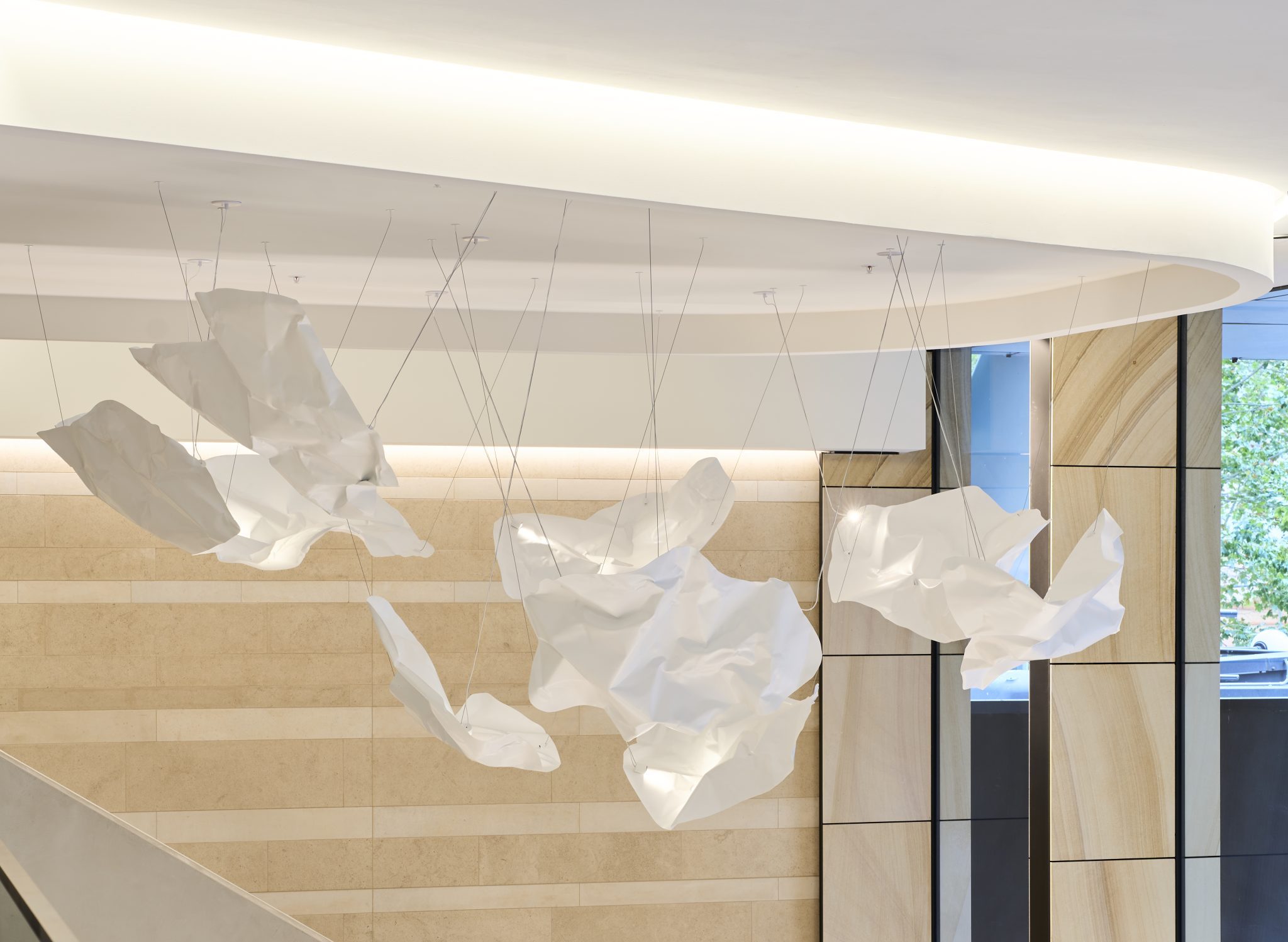
An example of this collaborative approach would be our project with Charter Hall at 555 Collins Street. Throughout the project, we were in frequent communication with the client and the architects, including specialist consultants, the Wurundjeri Woi Wurrung Cultural Heritage Aboriginal Corporation. This was to ensure that each commissioned work responded meaningfully to the building’s design as well as its cultural context. It was through strong collaboration and coordination that this project was successfully formed.
When art consultants are incorporated early on, there is always opportunity to commission art that responds to the architecture, as well as a consideration for the people inhabiting the space and the context of the building. Patrizia Biondi’s Timber Tapestries Stories Covered in Grain at Rosebery Engine Yards is a fitting example. Developed in close collaboration with the architects and heritage consultants, the sculpture was conceived in direct response to the site’s industrial history and adaptive reuse vision, with the artist repurposing salvaged timber that connects back to the former tenants of the site itself. The result is a work that reflects curatorial consideration from the outset.

Start the Conversation Early
Bringing a curator to the table from the first DA meeting ensures art is considered early, spaces become more meaningful, collections become more cohesive, and the people who inhabit those spaces every day feel that consideration. If you are at the beginning of a project and wondering where art fits, that instinct is exactly right. Get in touch with Art Pharmacy and let’s start the conversation now.
About Art Pharmacy
Art Pharmacy is a B Corp-certified art consultancy working with developers, architects and government agencies to deliver public art strategies, artist commissions and integrated cultural programs.
We specialise in embedding art into major developments, public spaces, transport infrastructure, and commercial buildings.
Article by Josie Lawrence